Sources & Provenance
The Authentication Tool is grounded in original Innocenti factory documentation and contemporaneous archival material. This page defines the nature and provenance of those sources.
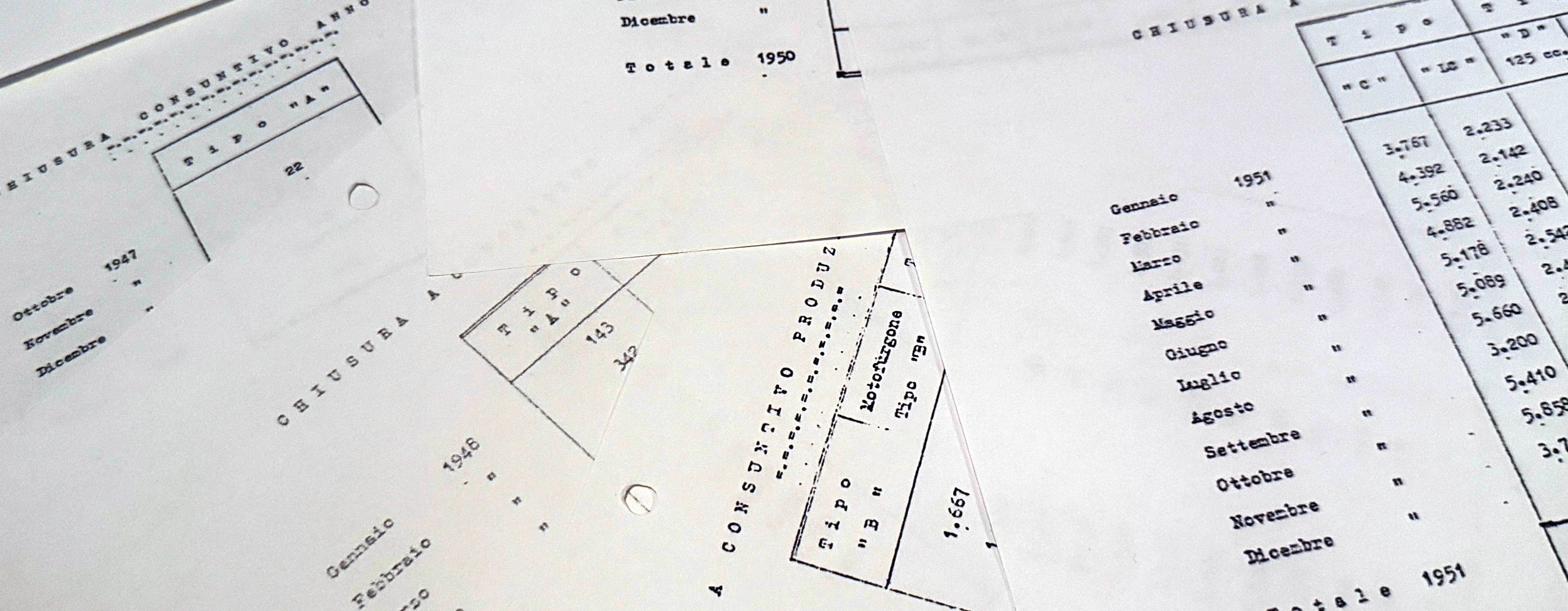
Primary factory production records
The core evidential base of the Authentication Tool consists of original Innocenti factory production records. These include documented frame and engine numbering sequences, monthly and cumulative production totals, and known transition points between models, prefixes, and production phases.
These records were created contemporaneously for manufacturing control, accounting, and homologation purposes and reflect factory production reality rather than retrospective interpretation.
Contemporaneous factory publications
Period factory-issued publications, technical bulletins, internal reports, and statistical summaries are used to corroborate and contextualise raw production figures.
These materials are treated as primary evidence where they directly reflect factory practice.
Archival material held by the British Lambretta Archive
The British Lambretta Archive preserves original documents, reference tables, and verified datasets derived directly from factory sources.
These materials are preserved without retrospective alteration and form the authoritative archival record on which the VIN Search relies.
Excluded and unsupported sources
The Authentication Tool does not rely on anecdotal evidence, owner-submitted lists, crowd-sourced databases, or undocumented assumptions.
Secondary publications are used only where they can be independently verified against primary factory material.
Provenance and traceability
Every dataset used by the Authentication Tool is traceable to identifiable factory documentation or archival holdings.
Where gaps exist in the historical record, these are acknowledged rather than filled through speculation.
Relationship to dataset construction
This page defines the provenance of source material. How fragmented factory records are reconstructed into usable datasets is explained separately within the Tool documentation.